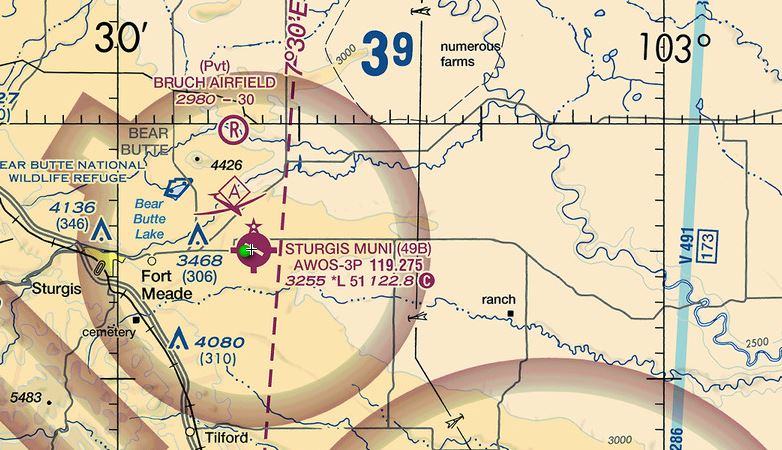
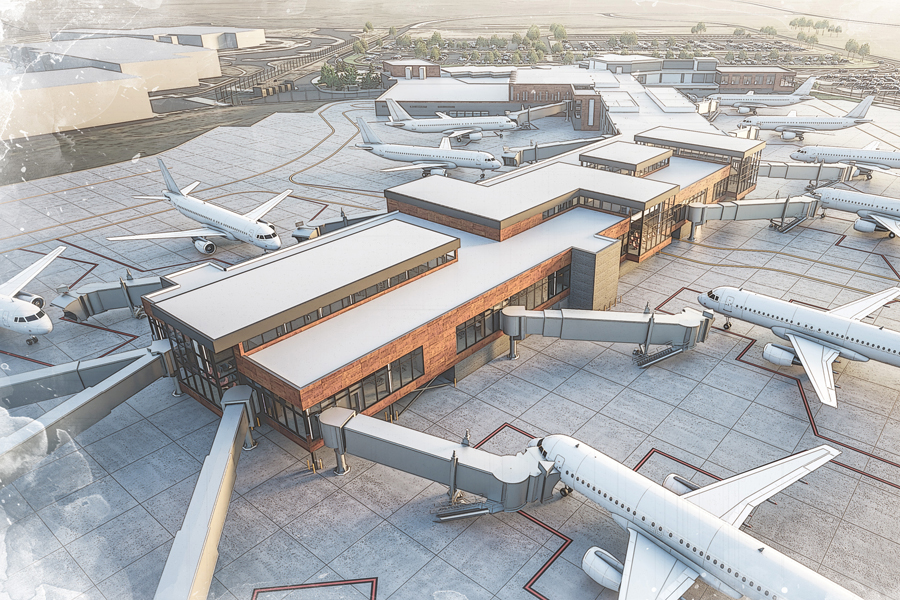
On April 21, 2025, the Sturgis City Council approved a $6 million infrastructure project that will modernize Sturgis Municipal Airport through a new terminal building and the construction of a parallel taxiway—two critical upgrades aimed at improving safety, accommodating growth, and enhancing the airport experience.
The improvements are funded primarily through the Federal Aviation Administration (FAA) and the South Dakota Department of Transportation (SDDOT), which will cover 97.5% of total costs. The City of Sturgis will contribute only 2.5%, with just $15,000 budgeted in 2025 to initiate design and planning work. Remaining local funds—approximately $140,000—will be programmed into the city’s 2026–2027 budgets.
The upgrade consists of two projects:
Terminal Renovation – Estimated at $495,000, this project will modernize the existing terminal facility. It is funded through the Airport Infrastructure Grant (AIG) program, a federal initiative under the Infrastructure Investment and Jobs Act (IIJA). The city’s local match is $7,500.
Parallel Taxiway Construction – Estimated at $5.575 million, this safety-driven project will allow aircraft to move safely to and from the far end of the runway without using the active runway itself. This addresses the current risk posed by back-taxiing along 4,000 feet of runway, which becomes increasingly hazardous as based aircraft and jet activity rise.
These improvements are made possible by the AIG program, which is delivering $14.5 billion over five years to airports across the U.S. to fund runways, taxiways, terminals, airport transit connections, and sustainability projects. In FY2025, the FAA has made $2.89 billion available nationwide, and Sturgis is among the non-primary airports leveraging this once-in-a-generation opportunity.
To qualify, airports must be included in the National Plan of Integrated Airport Systems (NPIAS)—a designation confirming that the airport contributes to the national airspace system and meets civil aviation and public transportation needs.
With rising aircraft operations and increasing jet traffic—particularly during high-traffic events like the Sturgis Motorcycle Rally—these improvements position the airport for long-term operational safety and regional economic development.


Leave a Reply